Wednesday, May 2, 2012

First TV interview about Maleficarum

We've started the media tour for the premiere of Maleficarum in cinemas here in Bolivia, which means lots of TV interviews. I've translated part of the first here so you can laugh openly at me. It's ok, go ahead.

Please keep in mind that I normally don't get up before 9AM unless we're shooting a movie (I sleep a lot, ok?), so rising at 6AM was really early for me.

Also, I put on the clothes I was wearing the day before, like, picked them up off the floor and put them on. More thought should go into these things. I look like I'm from the far North (which I am...), or very cold. Very, very cold.

Hemos empezado el tour de medios aqui en Bolivia para el estreno de Maleficarum, muchas entrevistas pues. Yo puesto uno aqui para que puedan reirse un poco de mi.

Normalmente, me levanto a las 9 de la mañana, excepto cuando estamos rodando una película (me gusta dormir, ok?) entonces levantarme a las 6 es un poco tempranito.

Tambien me he puesto la ropa del dia antes que estaba en el piso. Parece que soy del Norte (si lo soy, pero...), o que tengo mucho frio. Mucho frio.

TV announcer: You're the producer and actress of the film, yes?

Me: Yes.

TV announcer: So, what's your role in the movie?


Me: I'm Mariana and I'm tortured by the Inquisition.

Jac: (Lots of talk about the movie Maleficarum, which I really should have participated in, but was basically a zombie instead.)


Wednesday, April 25, 2012

Vampires

As I've been finishing up the script for my next movie, Olalla, I've been thinking a lot about vampires. Mostly since my next movie involves vampires and we just wrapped on another movie about vampires, Dead But Dreaming, and we'll be shooting the second movie in that series soon as well.

The poster of the movie that ruined my 6th year
That will make my movie the third this year. So, what's with all the interest in vampires? For me it started pretty young. When I was about 6 years old my father showed me the movie Fright Night. I'm sure he thought it was appropriate for someone my age, being rated PG. It wasn't, it scared the living daylights out of me and I wore a scarf to bed for a year after that, even in the summer, thinking that vampires were going to come and kill me in the night.  Children tend to think that the world centers around them, don't they?

After the year was up and the vampires didn't come to kill me, I gave up wearing the scarf to bed and began thinking about the origin of the vampire myth. It was just around this time, I was 7 and in second grade, that I was learning about research papers and researching. So, I went to my school library and found several books about vampires. I read them all. In the midst of this, I began to understand the origins of the vampire in media.

She gives you that weird feeling
In my school library were a series of books about monster movies (Universal Studios) from the 30s-60s. The idea of the vampire in film began to take hold of me as a concept. My research broadened to the local library where I read more books and understood the vampire myth and where it came from. I thought about how amazing it would be to make a movie about vampires. It became a lifelong dream. Nay, obsession.

So, you must be thinking that I'm making a movie about the same kind of vampires as Jac's Dead But Dreaming. Nope. Dead But Dreaming's vamps are more classic, infectious vampires, bites, exchange of blood, and a little magical realism later, you've got a legion of the undead. Romantic vampires, with hopes and dreams, and vengeance, internal struggles. Good stuff, but not the same as my vampires.

In my research, I think I got to Robert Louis Stevenson when I was about 9 or 10 years old, I came across R.L.S.'s Olalla. It's the story considered to be the introduction of the concept of genetic vampirism, on which my movie is partly based. A soldier goes to a villa to convalesce, only to fall in love with the daughter of the decadent family who resides there. The family has a craving for blood. It's a strange story. At that time porphyria and related diseases were little understood, thus resulting in the idea that a "vampiric" disease could, or did, exist.

Olalla
My vampires are a family, a rather large family, who has learned to survive through the ages by keeping a low profile. They crave blood, they have to drink it, but it's not considered good form to kill thy neighbors, so they do it discretely. Some of them never even leave the house. And they tend to live longer than other humans.

My character* is named Olalla. She goes back to her family's home after a few years of attempting to escape them and her affliction; the prodigal daughter returns after having done something very, very bad.

For me, Olalla, inflicted with inherited vampirism, has a struggle that is literally superhuman. It separates her from the rest of humanity, it makes her a monster. At the same time, she has no desire to be like the rest of her family. Riddled by incest, they keep the line going, they do not mix their tainted genes with normal human beings. And there are other branches of the family as well. 

In an attempt to "educate" Olalla, so that she does not have to be "put down", her uncle Victor returns to the house to be her "teacher". What ensues is severe corporeal punishment, incest, nudity, bondage, all of the good nasty stuff that should be in a movie of this sort. You know what I mean. While I'm including a bit of camp, and it has its humorous moments like all of my films, it's a disturbing story.

*Yes, I gave the lead female role to myself. I really didn't want to do a casting for an actor who (might) do what I'll willingly do in a movie. I'm less trouble to work with ;)


Sunday, April 8, 2012

Reasons

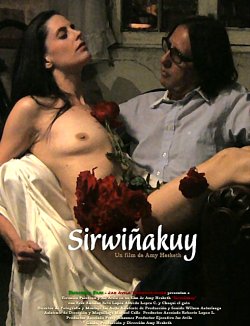
The very beginning of the film
With the release of Sirwiñakuy, I've been getting a lot more messages, emails, reviews, and commentaries. It's pretty amazing that people have taken so much to my first film. Something that not many people expect from their opera prima.

The beautiful response that I've had to this film is almost overwhelming, but it's made me think about why I make films. And since lately I've been feeling like I need a break from work, (you know, like, a vacation) I feel the need to revisit and coalesce the reasons that I make films.
 When I first released Sirwiñakuy in theaters in Bolivia the response was mixed, critics divided, some openly hostile, others supportive. The audience as well was divided, but didn't stop watching, word spread that it was a film that needed to be seen, and so it stayed on the big screen for 5 months.

Luis takes Anouk's wrist
Going with Sirwiñakuy to CineKink 2012 was a wonderful experience, and the response was touching. One woman told me that I expressed something with my film that she had never had the words to say. Others simply told me how much they liked and, how great the movie is.

And there were comments in magazines as well. Good stuff.

Now, with the release on DVD and download, that beautiful response has been coming in from all corners of the Earth. I'm amazed by how easily word of mouth spreads over the internet.

A Danish couple sent me some messages and the wife, a prominent Danish D/s blogger wrote a great review that can be read here in English and read here in Danish.

Things get interesting...
The messages read as follows:

Audiences are divided about whether this is rape or love-making
"On the odd click I found 'Sirwiñakuy' last night and decided to purchase and download it. My purpose was for my wife and I to take it in - in bed - as a pleasant conclusion to a 17 hour drive from Austria to Denmark. I feared I might fall asleep at some time during the 111 minutes. That never happened.

Here's a quote from the sparing conversation we had while totally enjoying your movie:

Her: This is an A movie. Not a B!
Me: I agree. It's an A+. .... I never said it was a B, I just said it was low budget.
Her: ... fantastic ....

We were particularly taken by the intricate expressivity of Veronica Paintoux, particularly the facial expressions, signaling the struggle of temptation, urge and reservation.

It takes an excellent director, a great actress and a good eye behind the camera to bring this out in such detail. Come to think of it, another director who has that ability is our own (ie. Danish) Susanne Bier, who recently returned from Hollywood with an Oscar. The movie also reminded us of Lars von Trier's work with dogma movies.

As I said: We were completely taken by the story, the acting, the directing ... and we will definitely watch your movie anew and find new facets on every occasion - just as we have with the classic 'Story of O'."

They went on to say in a second message:


A breach of boundaries?
"Your work is a sovereign example of someone having the guts to do what is right and true for them. Carl Th. Dreyer was criticized to death as Lars von Trier has been all along. I'm quite certain it escapes even Susanne Bier why she's currently (commercially) one floor above you in the tower of film.
In our opinion you're poised to become - you are - big. I think we most certainly 'got it' and the sensations you stirred with your work still linger with us. What more can anyone ask than to make a difference to someone. To give something to somebody. Not anybody but those appreciative and grateful somebodies. Eg. us."

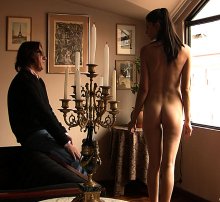
A detail...
I would have to be made of stone for these words not to touch me. Touched, was I indeed. The second message made me tear up a little. It didn't hurt that they compared me to Lars von Trier, Susanne Bier, and Carl Dreyer. That's something that would put a smile on any young filmmaker's face.

To have someone say to me, "your movie touched (insert other positive verbs here) me", or "you said something with this film that meant something to me on a personal level", means so much to me. That I might have impacted another person, even one, in a positive way, that I gave something wonderful to another. That is a big reason why I make films.

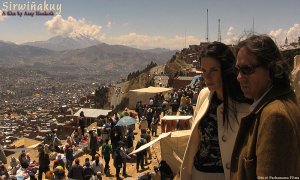
Anouk admires Luis' ancestral home
Sirwiñakuy, being my first film, has a lot of "me" in it in terms of art. The soft light, the characters, the way the story plays out. Not every film has so much of one's self in it. This movie was something kicking around in my head and on paper for more than 10 years. It was a part of me. A part of me remains in the movie and will always be there.

I wanted the movie to be right. I wanted to wait for the moment when I could understand the characters, when I had the maturity to make this movie. The story needed to be told carefully, about this delicate, violent relationship. And so they tell me I did.

So... Soul-crushing criticism? Check! Bouncing back with the even better (and better written) complimentary criticism? Double check!

(You might want to have a snack handy while viewing)
I've since gone on to make 2 more films, very different each in their own way. And I don't believe in going back and re-editing. Every film is a new adventure, a new opportunity to learn.

This subject of putting my "self" into my movies has come up more lately because I'm finishing the script of what I hope will be my fourth film. It's about a family of vampires. I play a member of the family. Can a film director make a movie about a family without going over their own family issues? Is there a reason they're vampires? *cough* We shall see. This one is dark, most will find it darker than the last three films.

But even in a dark film, there is an opportunity to give of the light, a thing that shines for someone. Even tears or anger can be a gift sometimes...

You can get Sirwiñakuy on DVD right here and on download right here!

Wednesday, March 28, 2012

An interview with me about Sirwiñakuy by Mike Haberfelner

An Interview with Amy Hesketh, Director of Sirwiñakuy

Your film Sirwiñakuy - I know we have talked about this before [click here], but could you bring us up to speed, what is it about and what does the expression "Sirwiñakuy" actually mean?
 
“Sirwiñakuy” refers to an indigenous custom still practiced by some Aymaras in Bolivia, in which a man takes his potential wife, basically kidnapping her, to his house to live with him. It’s like a try-out. If they get along, she cooks and cleans well, she gets along with his family, they marry. If it doesn’t work out, she goes back to her house, more or less in shame.
 
How did you actually first learn about the indigenous tradition of sirwiñakuy, and what inspired you to translate this into a modern day story?
 
I learned about the sirwiñakuy living here in Bolivia, it’s commonly talked about, joked about, etc. Also, a friend of Jac’s, Henriette Szabo PhD., is an anthropologist, a specialist in Bolivian indigenous groups, she defined it really well in her Dictionary of Bolivian Anthropology.
 
I didn’t actually translate the sirwiñakuy into my story, I wrote the script long before I came to Bolivia, and adapted it to here, changed the characters a bit, but made them more or less universal. When reading the script, Jac Avila [Jac Avila interview - click here] pointed out to me that it was a modern day sirwiñakuy, so the movie carries that title.
 
The story is, for me, a story that could be told anywhere, but is particularly suited to Bolivia, because of the different types of people here, the decadence of the upper classes, and the awkwardness that would result from a BDSM relationship in a country in which BDSM as a concept and a subculture is still very, very underground. In many other countries you can find clubs and stores, sometimes street fairs, that cater to a booming BDSM community. Not here.
 
The major differences between my Sirwiñakuy and the indigenous practice are that Anouk and Luis are testing each other, and she doesn’t lift a finger in the entire movie, he does all of the cooking and cleaning.

I think a key factor concerning the atmosphere of Sirwiñakuy is the apartment most of it was filmed in. How did you get the place, and did you already have it (or some place similar) in mind when writing the movie?
 
The house is really a character in the movie, it’s a family house owned for generations by Veronica Paintoux’s mother’s family, the Bedregals. Veronica worked it out so that we could use the third floor, and the Radisson Hotel was wonderful to give us rooms there for two weeks to lodge Veronica and her family while we invaded their home.
 
Amy Hesketh directing Veronica Paintoux
I loved working there, I would live there if I could, all those books, the history, it’s so complex. You could take years getting to know that house, just like you would a person.
 
On to your actors: Veronica Paintoux - how did you get her and what convinced you she would be perfect for the role?
 
I had never met Veronica, but had seen in her a supporting role in Jac Avila’s film Martyr. The chemistry she and Jac had in that movie made me think they would be good together in Sirwiñakuy. They have tension together, good tension, and that was key to the couple in the story. We called her up and she said that she would do it.
 
Veronica is a great actress, she doesn’t talk a lot about the character, she reads the script, and then asks key questions, builds her character, and voilá: perfection.
 
I have to confess that I was really nervous when I met her the first time, greeting her and her youngest daughter at the airport. Veronica is a person who is in constant motion, she never sits for long, I suddenly became unsure that she would be able to play quiet, calm Anouk. Obviously, my fears were unfounded, she channels Anouk wonderfully.
 
As this was my first film, I was nervous about asking her to do certain things in the movie, like the masturbation scene. But Veronica is a very open, unselfconscious person so she didn’t have a problem with anything.
 
Jac Avila [Jac Avila & Amy Hesketh interview - click here], who plays the male lead, has been a longtime collaborator of yours. How did you two first meet, actually? And did you write his character with him in mind (at least to a point), and to what an extent are you influenced by him as a director?
 
Veronica Paintoux and Jac Avila
Jac and I met for the first time at a film festival in Oruro, Bolivia in 2005, where he was screening his film Martyr. I liked his film and thought we should work together and he apparently thought the same thing, because we’ve been doing just that for nearly 7 years now.
 
I wrote the male character (Luis Montéz) long before I met Jac, but I tailored it a bit to him when the movie was greenlighted, and changed parts of the character to a type of man that can be found in La Paz. This made the character easier for him to indentify with.
 
Jac does not influence me as a director. In fact, we tend to have superficial arguments about directing styles, especially when I’m directing him. Later on, he sees the footage and understands why I did what I did, and loves it. We have a mutual respect for each other.
 
Sometimes I feel like it’s easier to be a woman director, I have a gentler touch and people respond differently to me than they would to a man. I also use humor, that helps.
 
Some actors have told me that working with me is like therapy, in more or less words. I deal with really difficult issues in my films. The actors have to suffer. But I’ve never had anyone hate me after working with me in a movie. And one actress thanked me afterward for putting her through what I did in Barbazul. Catharsis doesn’t come from sitting on the couch.
 
The more movies I make, the more I delve into the darkness of the human condition. I work out a lot of issues in my movies. At the same time, I can’t take the humor out of my films. Horrible things happen in life, it’s best to laugh and cry about them to understand them better.

With your movie touching a controversial subject, what can you tell us about critical and audience reception of Sirwiñakuy?
 
The critical reception here in Bolivia was polemic. The comments ranged from calling me daring to saying that I inhabit the last circle of hell. Nevertheless, the movie ran for 5 months because of audience demand. The audience talked about the movie, it’s popularity spread basically by word of mouth. I showed up after a few screenings to talk with the audience as well and their comments were interesting.
 
In Bolivia, some people mistook the sadomasochism for domestic violence or violence against women. Half of the audience felt that Anouk knew what she was doing, it was her choice, and that she grew from her experiences. The other half thought that I was evil and was promoting violence.
 
A friend of mine said that the movie is like a mirror for the viewer, they see what they project. For instance, in your review, you seem to think that Anouk was raped by Luis in the movie, when she doesn’t say “no” or protest. You’re seeing what you want to see, and a lot of people also did that when they saw the film. Some even swear that they heard her say “no” at the beginning of the sex scene.
 
When I showed the movie in New York City in the CineKink 2012 film festival, it was another reception entirely. The audience laughed at the funny parts, and had a lot to say to me afterward. One woman came up to me and said that I had expressed something in Sirwiñakuy that she never had the words to say. A lot of the audience really liked the movie. And the criticism I received was extremely positive.
 
Since Sirwiñakuy, you have actually directed two more movies, Barbazul and Le Marquis de la Croix. Want to talk about those for a bit, and how do they compare to Sirwiñakuy?
 
Each is a different type of film. Sirwiñakuy is a more intimate story that centers around two characters. The camera, and thus the audience are flies on the wall, voyeurs of what happens in the movie. We see the characters’ cotidian lives as well as the more exciting bits. Everything combines into the events, large and small, that shape their relationship.
 
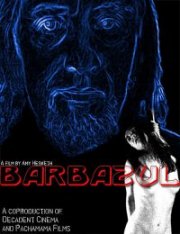
Barbazul is based on Bluebeard, the children’s story written by Charles Perrault in 1697. Barbazul (a contraction of “barba” (beard) and “azul” (blue)) is a serial killer, he kills his wives. I chose to make the movie a bit campy, and worked with cinematographer Miguel Canedo to bring something of a classic Italian 70’s cinema look to the movie. He basically read my mind and made it into image. The visual aspect also helps the viewer digest what they’re seeing because the subject matter is very dark, and I don’t gloss over that darkness.
 
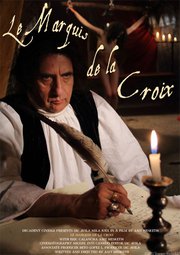
Le Marquis de la Croix is more full-on camp, it’s based on the writings of the Marquis de Sade, and I kept some of the dark humor present in his stories. After Barbazul I wanted to make a really violent sexy film, more grindhouse style, and this movie popped into being. After a couple of weeks of shooting, of course. People keep asking me when this one will be released, because they’ve seen some of the photos from the shooting.

You have recently also starred in Jac Avila's upcoming Dead But Dreaming [Jac Avila interview - click here] - a few words about that one?
 
We’re still shooting Dead but Dreaming, a vampire epic taking place in several different eras. I have a difficult role, lots of really awful things happen to me in the movie. But it’s a good role with a good arc. That’s important to me as an actor, the character arc. She’s completely different from Mariana in Maleficarum.

Any future projects you'd like to talk about?
We’re planning to shoot my fourth movie this year, called Adela (working title), about a family of vampires. It’s loosely based on the Robert Louis Stevenson short story Ollala, which was the first story to go into the idea of genetic vampirism, what was later discovered to be a rare genetic disease called porferia.

Your website, Facebook, whatever else?
 
http://vermeerworks.com
http://movies.vermeerworks.com
http://facebook.com/amyhesketh
http://amyhesketh.blogspot.com

Anything else you are dying to mention and I have merely forgotten to ask?

Sirwiñakuy is now avilable on DVD at http://vermeerworks.com/store/dvds and and for download at http://movies.vermeerworks.com

Thanks for the interview!
 

Saturday, March 17, 2012

Review of Sirwiñakuy

Sirwiñakuy
review by
Mike Haberfelner


The expression Sirwiñakuy basically describes a tradition practiced by some indigenous Andean tribes of men kidnapping their potential wives and live with them for any amount of time (some times years) to figure out if they are at all compatible. If yes, marriage is to follow, if no, the woman is let go ...
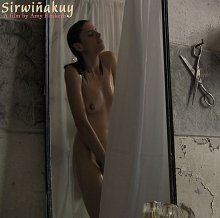
It all starts in a café: Luis (Jac Avila) finds a girl in the crowd, Anouk (Veronica Paintoux), whom he feels immediately attracted to - hardly surprising, she is rather attractive. She feels his gazes, and even though he is a great deal older than her, and not the best looking guy in the room, she feels weirdly drawn to him, too. So when he rather out of the blue asks her to come with him, she agrees. They go to her place, where she packs a few things, then move on to his place. Luis's place turns out to be a decaying apartment filled with bookcases and furniture from a time before Anouk or even Luis were born. Anouk feels terribly out of place, but something tells her not to leave. Even when Luis treats her with the utmost arrogance and talks down to her, she sticks with him. That night, they share a bed, but don't have sex.
The next day, Anouk meets Geoff (Erik Antoine), her ex from high school who still cares for her, in a café. Their conversation makes her forget the time - and when she comes home for dinner, Luis pulls down her pants and panties and spanks her. She sticks with him. The next day, he buys her cloths, clothes that are absolutely not her style, and that her grandmother would have worn. She sticks with him still. Then Luis wants to cut her hair, but she says no and stands her ground - even if that results in him raping her. Still, she sticks with him.
In the next few days, Luis humiliates Anouk in quite a few ways. Sometimes he almost overdoes it, and on occasion she prepares to leave - but always lacks the determination to go through with it.
Only a week after their last meeting, she meets with Geoff again - and he is shocked to see her totally changed, the fun-loving girl he knew has suddenly turned in a submissive with no will of her own, but everytime he questions her about her domestic situation, she evades his questions. But he may have planted the seed of rebellion in her ...
Click here to open the Spoiler Pop-up!

Superficial feminists and followers of the church of political correctness will probably dislike this film for its supposed patriarchal undercurrents and for showing the woman in a victim role - and of course couldn't be further from the truth, as Sirwiñakuy isn't at all about gender policies but a very empathetic portrayal of a master/slave relationship that also shows the weaknesses of the master-role as well as the sources of empowerment of the slave character. And it's all captured in extremely moody and powerful images by first-time director Amy Hesketh, who manages to make this a film of high erotic tension, even if (or rather because) the sexy bits never become self serving. And Veronica Paintoux brings just the right mix of  vulnerability and sexual power to her role to make it hers from frame one.
Absolutely recommended!

Oh, and if my review at all got you interested, you may want to get the movie from here: http://movies.vermeerworks.com or http://vermeerworks.com/store/dvds/
 
review © by Mike Haberfelner

Thursday, February 23, 2012

Dead But Dreaming

I had some time to post a bit about the new film that I'm producing and acting in, Dead But Dreaming. Mostly because when I was home more sore than I've ever been in my life. I slept on my back because it was the only position that didn't wake me up from the pain.

It could be worse, I suppose. And of course, the big question, really the only question, was it worth it? Yes, of course it was worth it.

My (problem?) is that I have an overactive imagination and an ability to see how things look in a scene, like a little edited reel in my head. And when I see, on that reel, that a scene would look simply awesome if only I did this incredibly difficult and taxing performance... well, if it doesn't involve risk of permanent bodily injury, I'll do it.

And that's why I was writing this at my computer instead of helping everyone bring back the roomful of equipment, costumes and effects from the location we had shot in for the past three days.

And I needed a bit of rest before I went off to NYC for the CineKink film festival. More on that later.

Dead But Dreaming, directed by Jac Avila, is a film that has been in the works for a very long time, and under many names. It's the film that I was slated to act in back in 2005 when I met Jac. He cast me for that movie specifically. Instead, we didn't make the film then, and I slowly took over half of the business, produced Maleficarum, and directed three feature films (Sirwiñakuy, Barbazul and Le Marquis de la Croix). It was finally time to make the vampire movie that had brought us together.

Yes, you read right. A vampire movie, shot in Bolivia, with an international cast. I can tell you right now, it's incredibly sexy and violent, sometimes simultaneously. But you're a fan of that content, that's why you follow my blog. (Unless you're one of the spineless anonymous haters who give me a hard time. And for some reason still read my blog... cough.)

This movie is incredibly involved, takes place in more than one era, and has some extremely complicated scenes, not only involving action, but many people. Normally it's something that an indie company would not want to produce for fear that it wouldn't turn out so great on a lower budget. Now, looking at the rushes from the 16 days we've shot so far, any secret fear I had about that has been dispelled, it looks amazing.


Miquel Inti Canedo is the cinematographer yet again in this movie. He proved himself in Maleficarum and Barbazul and Le Marquis de la Croix, and now, like anything that improves with time, he's more refined. Seriously, this guy's got talent.

We have a lot of the same tried and true actors working with us Veronica Paintoux, Mila Joya, Beto Lopez, yours truly, and a few new faces, like Jorge Ortiz, the experienced and prolific Bolivian actor. Some of the brand new faces are working out really nicely. It doesn't hurt that these individuals came up to me when we were shooting and complimented me on my performance. And were very helpful on set. And acted well. When I say "thank you", I mean it.

Making movies takes a lot of dedication and sacrifice and we're really happy to have more people working with us and willing to make those sacrifices and dedicate themselves to the art of cinema.


Tuesday, February 7, 2012

CineKink 2012 - Sirwiñakuy

The other night, amid some stress about the new production, I was asking Jac about whether or not we'd heard back from CineKink, when I answered my own question by looking at the inbox. Just then the doorbell rang and Jac went downstairs to see who it was, I checked the email, scrolled down the list of selections and saw Sirwiñakuy in the "S" section. When Jac came back upstairs, I had a big grin on my face.

It's really nice to have my first film be selected for CineKink NYC, not only because it's my first film and my first festival, but because of what CineKink represents. CineKink is one of the only festivals of its kind, and the largest, featuring films that range from Hollywood and beyond. They receive mountains of submissions, so to be selected by them is an honor, especially with my first film.

After the festival in NYC, CineKink goes on tour with the films, all over the USA. So, many will have the chance to see Sirwiñakuy in the theater as many already did in Bolivia. Speaking of which, there has been a large number of people clambering for a second round of Sirwiñakuy in theaters here in Bolivia, which we intend to answer with "Si!" and put it again in the theaters.

Overall the response to my first film is one that not many people have experienced, being attacked by critics, loved and hated, respectively, by the audience,  and selected by an international film festival. It's had an impact.

In addition, I feel that attending the festival (I'll be there the 10th-12th) is a great opportunity to mingle with like-minded filmmakers and an audience that are open to the types of films celebrated by CineKink. It's a rare opportunity.

We shall see how the audience in NYC greets my film on Saturday, February 11th, 2012, at the Anthology Film Archives, 32 Second Avenue (@ 2nd Street). I hope to see you there!

Saturday, December 31, 2011

Maleficarum Interview, Clip 8

In the eighth clip, I talk about the roasting scene in Maleficarum...  

Maleficarum is available for DOWNLOAD and ON DVD!

Tuesday, December 27, 2011

Maleficarum Interview, Clip 7

In this clip, I talk about the wooden horse, otherwise known as the Spanish Horse torture in the movie Maleficarum.

Maleficarum is available for download here and on DVD here!

Wednesday, December 21, 2011

Maleficarum Interview, clip 6

In the sixth part, I continue talking about the torture in Maleficarum...

The movie Maleficarum is available for download and on DVD!


Friday, December 16, 2011

Maleficarum Interview, clip 5

In this segment, I talk about the torture in the movie Maleficarum.

Maleficarum is available for download here and on DVD here !

And has been listed on IMDB here!


Wednesday, December 14, 2011

New Production!

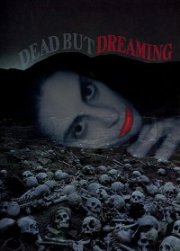
The poster of Dead But Dreaming
I'm really excited to announce the new production of Pachamama Films/Decadent Cinema, Dead But Dreaming, slated to begin shooting in early 2012!

I'll be producing and acting in this one, much like Maleficarum. Veronica Paintoux, myself, Mila Joya, and Jac Avila are starring, and we're casting soon for lots of other parts. There are lots of interesting speaking parts in this one.

This movie is sizing up to be quite a production, read big. We're already looking at a lot of exotic locations in Bolivia. The diversity in Bolivia and the cost of production will give us some really spectacular scenes.

Since the movie takes place in different parts of the world and in different times, this is a real challenge for me, but one I'm happy to rise to.

I just love making movies!


Thursday, December 8, 2011

Maleficarum Interview, clip 4

Here is the fourth clip of an interview with me about the movie Maleficarum, in which I talk about how it was to play Mariana de Castro.

Maleficarum is now available for DOWNLOAD and on DVD.


Wednesday, December 7, 2011

The art of suffering, or suffering for one's art.


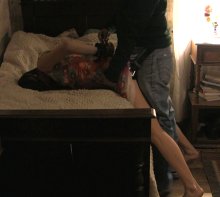
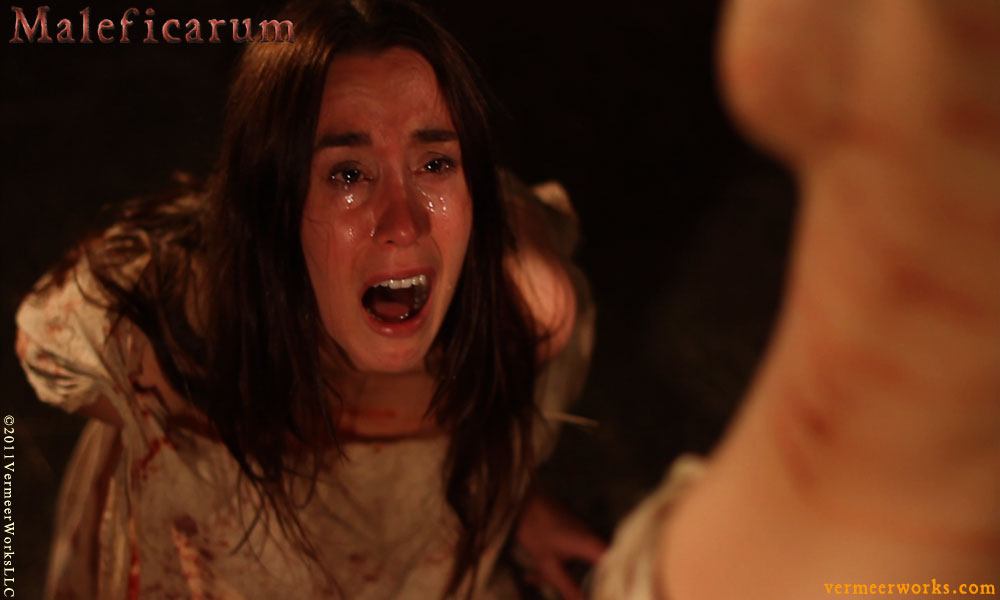
Mariana looks up at her lover in torment.
I was looking at a series of vidcaps from the movie Maleficarum today and it hit me how much I suffer in that film. Yeah, yeah, it's not like I didn't realize it before, but I really cry a lot in that movie. And it made me think about suffering as an actor and the suffering of artists in general and whether we really have to suffer for our art or if it makes us suffer inherently.

Those are real tears people.
In my case, it is my choice, not only do I write and direct films with a dark slant to them, but I act in them as well. This means that I have to delve deep into my inner darkness rather frequently.

Some may ask why I would want to do that at all, ever. People don't want to feel bad? Right? We want to feel happy, like, all the time, and I'm no different. Feeling bad is not the goal of most, at least consciously.

But suffering in art is so different from suffering in real life.

When we were shooting Le Marquis de la Croix, I found out that my father had been diagnosed with fronto-temporal dementia, that he was having hallucinations about a man upstairs in his house, whom he claimed was trying to kill him, he couldn't articulate very well, and he could no longer do various things for himself.  It was difficult maintaining my concentration during the remainder of the production, I felt like I was holding myself together with my own arms. When we wrapped on Le Marquis de la Croix, I went to Maine and spent 6 weeks assessing the situation, putting my dad in assisted living, dealing with his estate and living the horror that is having a parent with such a disease.

That looks like some dirt there too.
Before all that happened, I played the part of Jane in my second movie, Barbazul, who does not exactly have a happy ending. And I played Mariana de Castro in Maleficarum, who has it decidedly hard.
This is a sad scene.

Francisca doesn't seem to be waking up.
Suffering for a part in a movie is something that requires an actor to reach deep inside themselves and pull out the most horrifying moment they ever experienced.

For Mariana in Maleficarum, I had to summon up those moments, it was difficult, I had to think about the moments in my life when I've suffered, the moments when I've felt real fear (there were some moments in the shooting when I was actually afraid, like the roasting scene). In the end, I went deep into fear itself, the one that lives in our primitive brain, for my motivation.

For Jane in Barbazul, I had to imagine what it would be like to be murdered by a serial killer. When I was directing the other actresses, I actually cried silently while we were shooting one of the scenes. If you don't believe me, you can ask Miguel, the cinematographer, he saw me.

A day of shooting scenes like that left me with the impression that the world was falling apart at the seams. When you go so far into an emotion, it stays with you, it's like a thin invisible cloth that covers you, enveloping you in sadness. Hot showers and chocolate were mandatory after those days.

And now, now that I've experienced real suffering, and I'm on the verge of playing another very tragic role, I feel... not reluctant, but like I have more to work with.

Acting is about transmuting feelings into a performance. So, now that I have the opportunity again, I'm glad to be able to do that. Who, in the passage of normal, everyday life has the chance to transmute, or transform their feelings into something else? As strange as it may seem in the context of having to suffer, I feel lucky to be able to do that.
Mariana questions all this.

Realization,  hopelessness.
For me, it's like a kind of art therapy. I'm not sure how I would deal with those feelings otherwise.

In transforming suffering into art, I free myself from suffering, I can look at my performance from a place of strength. I feel proud of what I have done, and when it touches others, I feel even more proud to have given a strong performance.

I'm always writing about transformation, it seems, but as an actor, a writer, a director, I transform myself or others into something else on a constant basis. I think this is one of the more important roles of artists in society; we can speak for the soul.

Mariana is pretty convinced this is her fault.
At this point, you might be nodding your head, or thinking I'm a nut, but either way, art has made its way into most peoples' lives in one way or another. Art can also help us escape, like in a potboiler novel. Or it can entertain, or make us think, or feel something, or come to a greater understanding of beauty, or darkness. Art can help us find beauty or humor in that very darkness.

So, am I looking forward to suffering next year? Sure am. Pain has a place in the life of an artist as does its opposite happiness, because we can give it back in a different form, give it over to others. Artists should be givers, even if what we give is not pleasant to look at, it has a purpose.


Saturday, December 3, 2011

Maleficarum Interview clip 3

Locations, locations, locations... Another exciting installment of me as a talking head. This time I talk about the locations in the movie Maleficarum.

Maleficarum is now available for download HERE and on DVD HERE